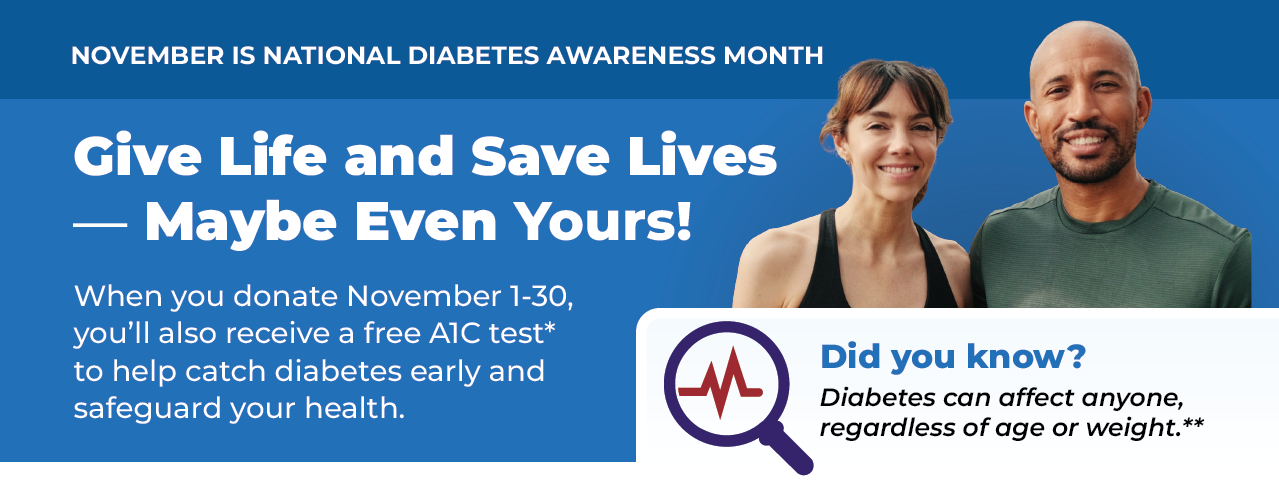
At San Diego Blood Bank, your donation saves lives—but it can also help you learn more about your own health. This November, all donors who give blood, plasma, or platelets will receive Hemoglobin A1C (A1C) testing with donation.
The A1C test is one of the most widely used screenings to detect prediabetes and diabetes, two chronic conditions that affect millions of Americans. Knowing your numbers can empower you to take steps toward better health.
Please note: donation is required to receive A1C test due to testing limitations, which means we cannot offer this benefit to donors who are not eligible to donate during the time period or to the general public.
Below, we’ve answered common questions about A1C testing and why it matters for you and your community.
What is the Hemoglobin A1C (A1C) test?
The A1C test is a simple blood test that measures your average blood sugar (glucose) levels over the past three months. It works by detecting the percentage of hemoglobin in your red blood cells that has glucose attached to it.
🩸No fasting required – you don’t need to change your eating or drinking habits before the test.
🩸Quick and reliable – results will be available in your San Diego Blood Bank donor portal within 1–2 weeks.
🩸Widely trusted – the A1C test is a primary method doctors use to diagnose diabetes and monitor blood sugar levels.
A higher A1C percentage can signal prediabetes or diabetes, conditions that benefit from early detection and lifestyle management.
Why is A1C testing important?
Diabetes is one of the leading chronic health conditions in the U.S. According to the Centers for Disease Control and Prevention (CDC), more than 38 million Americans have diabetes, and an estimated 1 in 5 don’t know they have it. Even more alarming, 96 million U.S. adults have prediabetes, and most are unaware (CDC, 2022).
The good news? Early detection saves lives. Identifying elevated blood sugar levels through A1C testing can lead to lifestyle changes, medical treatment, and preventive care before serious complications arise.
What do A1C test results mean?
A1C results are measured as a percentage:
Normal: Below 5.7%
Prediabetes: 5.7%–6.4%
Diabetes: 6.5% or higher
(Source: Mayo Clinic, 2024)
The results of the screening test provided are not intended for diagnostic purposes. If your results indicate prediabetes or diabetes, you can talk with your healthcare provider about next steps, which may include nutrition changes, exercise, medication, or insulin therapy.
Does donating blood affect my A1C test results?
No. The A1C test measures glucose attached to your red blood cells over the past three months. While blood donation temporarily lowers your blood volume, it does not change your long-term average glucose levels.
What are the benefits of A1C testing during blood donation?
When you give blood at San Diego Blood Bank, you:
⭐Save local lives by providing blood products for Southern California patients in hospitals and emergency care.
⭐Learn more about your own health with mini-health screenings like blood pressure, hemoglobin, and now, in November 2025, A1C.
⭐Take preventive steps to protect your future health by knowing your numbers.
What should I do if my A1C numbers are high?
If your A1C results fall within the prediabetes or diabetes range, we urge you to contact your primary care physician for a full medical evaluation. Only your healthcare provider can confirm a diagnosis and recommend next steps, which may include lifestyle changes, further testing, or treatment.
Early detection is one of the most powerful tools for preventing or managing diabetes. Knowing your numbers now can help you take proactive steps toward protecting your health.
How do I get my testing results?
If you donate blood, platelets, or plasma in November, your A1C results will be available 3-5 days after your donation in your San Diego Blood Bank blood donor portal. You’ll see them listed alongside your other wellness stats, such as hemoglobin and blood pressure in your Wellness Stats.
What should I do if my A1C numbers are high?
If your A1C results fall within the prediabetes or diabetes range, we urge you to contact your primary care physician for a full medical evaluation. Only your healthcare provider can confirm a diagnosis and recommend next steps, which may include lifestyle changes, further testing, or treatment.
Early detection is one of the most powerful tools for preventing or managing diabetes. Knowing your numbers now can help you take proactive steps toward protecting your health.
How do I make an appointment?
Appointments are encouraged. Walk-ins are welcome. Find a location for your November blood donation online or call (619) 400-8251.
Share Your Health: By giving blood, you’re helping patients in need across Southern California. With complimentary A1C testing this November, you’re also gaining important insight into your own health. Knowing your numbers today can protect your tomorrow.
References
Centers for Disease Control and Prevention. (2022). National diabetes statistics report, 2022. U.S. Department of Health & Human Services. https://www.cdc.gov/diabetes/data/statistics-report/index.html
Mayo Clinic. (2024). A1C test. Mayo Foundation for Medical Education and Research. https://www.mayoclinic.org/tests-procedures/a1c-test/about/pac-20384643
American Diabetes Association. (2024). Diabetes diagnosis. https://diabetes.org/about-diabetes/diagnosis